



NAMI Applauds Better Georouting for 988 Callers to Local Support

From nami.org —
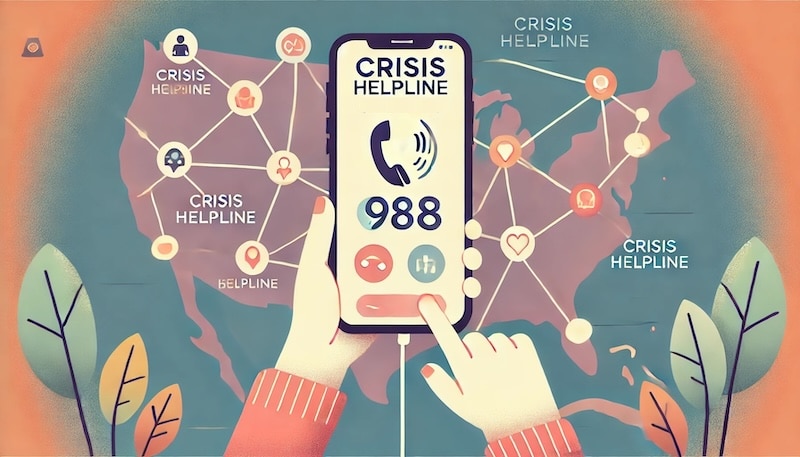
The National Alliance on Mental Illness (NAMI) applauds the new steps to ensure calls to the 988 Suicide & Crisis Lifeline are immediately connected to local resources. The U.S. Department of Health and Human Services (HHS) announced that two major telecommunications carriers, Verizon and T-Mobile, will start routing cellular phone calls to 988 based on the caller’s approximate location, versus by area code – known as “georouting”. This change will enable help seekers to speak to someone in their local community and be connected to local resources right away – to help them get well and stay well.
 “When someone contacts 988 during a mental health crisis, they deserve to be connected with local services and support, no matter where they are in the U.S.,” said Hannah Wesolowski, Chief Advocacy Officer of NAMI. “Today’s announcement is a major step to realizing the full potential of 988 and a reimagined crisis system. NAMI thanks HHS and SAMHSA for their leadership in making better routing of 988 calls a reality.”
Since 988 became available nationwide in July 2022, calls have been routed based on the help seeker’s area code. And since 97 percent of Americans have cell phones and are frequently on the move, a help seeker’s area code may not match where a person is at that moment in time. As a result, some people’s calls for help are routed to a call center that is not close to their physical location. This structure presents obstacles to addressing the immediate needs of help seekers in crisis and limits the 988 Lifeline’s ability to support all help seekers. While 988 crisis counselors can provide support regardless of a help seeker’s location, they may not be able to connect people in crisis to follow-up care within their local community.
Georouting is Different than Geolocating
 With today’s announcement, more people who call 988 will be routed to a crisis call center nearest to their approximate location, while avoiding disclosing a caller’s precise location.
NAMI has been a leading voice urging the federal government to take action to better route calls to 988 to help people in crisis, advocating with the Federal Communications Commission (FCC) since December 2020. Earlier this year, NAMI led a group of over 40 national organizations calling on the FCC and HHS to take immediate action to start this process.
NAMI continues to urge the FCC to finalize a proposal to require all wireless carriers to implement a georouting solution that routes calls but protects individual callers’ information. The FCC is expected to vote on the proposal in October.
Below is a history of NAMI’s advocacy for georouting calls to 988:
Georouting Contacts to the 988 Suicide & Crisis Lifeline
Where We Stand
NAMI believes people in mental health crisis deserve a mental health response. NAMI supports public policies and laws that ensure help seekers contacting the 988 Suicide and Crisis Lifeline are immediately connected to the nearest crisis call center, referred to as georouting, while protecting privacy and confidentiality.
Why We Care
Note: This policy position is in regard to knowing a person’s general location to route a call to the nearest call center. This position does not pertain to “geolocation,” or knowing a person’s precise location.
Mental health and suicidal crises can be devastating for individuals, families, and communities. The 988 Suicide and Crisis Lifeline is a life-saving resource for any person — or their loved one — to access support during a period of mental health crisis or emotional distress. Building community-level crisis continuums of care are essential to helping individuals get well and stay well, as outlined in the Substance Abuse and Mental Health Services Administration (SAMHSA) National Guidelines for Behavioral Health Crisis Care. When someone experiences a mental health crisis and doesn’t receive the care they need, they can end up in emergency rooms, on the streets or involved in the criminal justice system – or worse, they could lose their life. Early evidence suggests that crisis lines can reduce caller distress, and refer people to resources and community-based services.
The 988 Lifeline operates through a growing network of crisis centers around the country and serves millions of people in crisis annually via call, text, and chat. However, contacts to the 988 Lifeline are currently routed based on the help seeker’s area code. Because cell phone calls to the 988 Lifeline may not match the area code where a person lives or where they travel to, some people will be routed to a call center that is not close to their physical location. For example, if someone with a 703 (Virginia) area code calls the 988 Lifeline, the help seeker will be routed to a Virginia crisis center, regardless of where the caller is located during that crisis. This structure presents obstacles to addressing the needs of help seekers in crisis and limits the 988 Lifeline’s ability to support all help seekers in crisis access local resources. While 988 crisis counselors can provide support regardless of a help seeker’s location, they may not be able to connect people in crisis to follow-up care within their local community.
In an ideal crisis system, call centers should be able to connect help seekers to local services and supports, such as dispatching mobile crisis teams when needed, scheduling appointments with local community mental health providers, providing referrals to local resources like housing or food assistance, and conducting follow-up calls. To most effectively serve help seekers in crisis, all contacts should be connected to crisis centers based on the person’s general location and irrespective of the person’s phone area code – a process known as “georouting.”
According to the Federal Communications Commission (FCC), “Georouting refers to technical solutions for directing calls based on a geographic location for the origin of the call without transmitting information about the caller’s precise location.” Implementing a georouting solution that connects calls based on general geographic location would improve 988 services while avoiding disclosing a caller’s precise location. Notably, this is different technology than geolocation, which identifies a caller’s precise location for the purposes of dispatching life-saving services.
 NAMI believes that the 988 Lifeline should be an entry point for every person to receive support for immediate crises and also connect people in need to the care, support and resources they need to get well, and stay well throughout and after a crisis. NAMI supports implementation of georouting solutions for all calls, texts and chats to connect every help seeker to all available resources.
How We Talk About It:
- Every person who experiences a mental health crisis deserves to receive a mental health response.
- When people in crisis do not receive a mental health response, we often see tragic outcomes. People may end up engaging with law enforcement rather than mental health professionals, go to an emergency room where they wait hours — or even days — to get mental health care, or lose their lives to suicide.
- Every person in crisis should have access to a crisis continuum of care in their community — one that provides someone to talk to, someone to respond and a safe place to be.
- The 988 Suicide and Crisis Lifeline provides life-saving care to millions annually, giving people in crisis “someone to talk to.”
- The ideal crisis response system can respond quickly and link callers to follow-up care in the community, such as mobile crisis response teams when needed, social services like housing or food assistance, peer warmlines or community mental health providers.
- Because calls to the 988 Lifeline are currently routed based on the caller’s area code, which may not match where a person lives or where they travel to, some people will be routed to a call center that is not close to their physical location.
- For example, if someone with a 703 (Virginia) area code calls the 988 Lifeline, the help seeker will be routed to a Virginia crisis center, regardless of where the caller is located during that crisis.
- 988 crisis counselors will provide support regardless of a help seeker’s location, but the way calls are currently routed means they may not be able to connect people in crisis to crucial follow-up care within their local community because someone may be far away from their phone’s area code.
- When people reach out to 988 for help, they should have confidence that the support they receive is local.
- A georouting solution would not disclose a caller’s precise location but is needed to ensure that help seekers can be connected to local follow-up services.
- With so many communities making significant investments in building a crisis continuum of care, it is of the utmost urgency to implement a solution that ensures people in crisis are connected to those resources in their communities.
What We’ve Done
- NAMI letter to the FCC in response to their proposed rule on georouting for 988
- Reimagine Crisis partner letter to the FCC in response to their proposed rule on georouting for 988
- NAMI letter urging FCC and SAMHSA leaders to take immediate action to improve the routing of 988 calls (“georouting”) so that people in crisis are routed to a nearby call center rather than routed to a call center based on their area code
- NAMI press release urging immediate improvements to the 988 Suicide and Crisis Lifeline
- NAMI statement On FCC Action To Improve 988 Call Routing
- NAMI Reimagine Crisis Response campaign
- NAMI Ex Parte letters to FCC
- January 2024
- November 2023
- June 2023
- April 2023
- January 2023
- January 2023 (additional meeting)
- November 2022
- October 2022
- April 2022
- October 2021
- September 2021
- Comments in December 2020
